If you've ever wondered why some pages rank higher than others despite having similar keywords, the answer often comes down to search intent.
Search engines like Google don't just analyze keywords anymore. They aim to understand why users are searching and what type of information they expect to find. This understanding is known as search intent.
When your content aligns with search intent, users are more likely to engage with it, stay on your website, and find the information they need. As a result, search engines reward that content with better visibility and rankings.
In this guide, you'll learn What Is Search Intent, the different types of intent, why it matters for SEO, and how to optimize content accordingly.
Search intent refers to the purpose or goal behind a user's search query. It explains why someone is searching and what kind of information, product, service, or action they expect from the search results.
Search intent, also known as user intent or keyword intent, is the reason behind a search query. Every time someone enters a phrase into Google, they have a specific goal in mind.
For example, a person searching for "how to bake a cake" wants instructions, while someone searching for "buy chocolate cake online" intends to make a purchase. Although both searches involve cakes, their intent is completely different.
Search engines analyze these goals and try to provide the most relevant results. This is why understanding search intent is critical for SEO success.
Google prioritizes content that best satisfies user intent. If your page answers the user's question or solves their problem effectively, it has a better chance of ranking higher in search results. Matching intent is often more important than simply repeating keywords.
When visitors find exactly what they are looking for, they are more likely to stay on your website and explore additional pages. This improves engagement metrics such as time on page and reduces bounce rates. Better engagement can contribute to stronger SEO performance over time.
Content that aligns with user intent naturally leads users toward their desired outcome. Whether it's making a purchase, requesting a quote, or reading an article, intent-focused content often generates better conversion rates than generic content.
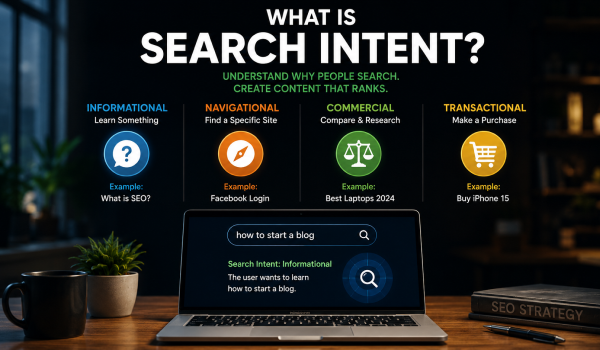
Informational intent occurs when users are looking for knowledge, answers, or explanations. They want to learn something rather than buy a product or visit a specific website. These searches often begin with words like "what," "how," "why," or "guide."
Examples include:
These searches typically return blog posts, guides, tutorials, and educational content.
Navigational intent occurs when users already know which website, brand, or page they want to visit. Instead of typing a full URL, they use a search engine to find the destination quickly. These searches are usually brand-specific.
Examples include:
The goal is to reach a particular website rather than discover new information.
Commercial intent occurs when users are researching products or services before making a purchase. They are comparing options, reading reviews, and evaluating solutions. While they are interested in buying, they are not ready to purchase immediately.
Examples include:
Content such as comparison articles, reviews, and buying guides works well for this intent.
Transactional intent indicates that the user is ready to take action, such as making a purchase, booking a service, or signing up for a platform. These searches often contain strong buying signals and have high conversion potential.
Examples include:
Landing pages, product pages, and service pages are ideal for transactional intent.
| Search Intent Type | User Goal | Example Query | Best Content Type |
| Informational | Learn Something | What is SEO? | Blog Posts, Guides |
| Navigational | Visit Specific Site | Facebook Login | Homepage, Brand Pages |
| Commercial | Compare Options | Best SEO Tools | Reviews, Comparisons |
| Transactional | Take Action | Buy Running Shoes | Product Pages, Landing Pages |
One of the easiest ways to identify intent is by examining the top-ranking pages for a keyword. If most results are blog posts, Google likely sees informational intent. If product pages dominate, the intent is probably transactional.
Words such as "buy," "best," "review," "guide," and "how to" often reveal user intent. These modifiers provide clues about what users expect from search results and help shape content strategy.
Always ask yourself what the searcher is trying to accomplish. Understanding their objective helps create content that aligns with expectations and improves the chances of ranking successfully.
Different intents require different content formats. Informational searches need educational articles, while transactional searches require product or service pages. Choosing the right format increases relevance and user satisfaction.
Users want quick and accurate answers. Providing clear explanations at the beginning of your content improves user experience and increases the likelihood of appearing in featured snippets.
Comprehensive content helps satisfy user intent more effectively. Including relevant subtopics, FAQs, and supporting information ensures users find everything they need in one place.
A common mistake is creating informational content for a transactional keyword or vice versa. This mismatch often leads to poor rankings and low engagement because the content does not meet user expectations.
Many marketers focus heavily on keywords while ignoring the actual reason behind the search. Search engines prioritize relevance and usefulness, not keyword repetition.
Google already provides clues about intent through the search results. Ignoring these signals can result in creating content that doesn't align with what users or search engines expect.
Search intent in SEO refers to the reason behind a user's search query. Understanding this intent helps marketers create content that matches user expectations and improves rankings.
Search intent is important because Google prioritizes content that best satisfies user needs. Matching intent improves visibility, engagement, and conversion rates.
The four main types are informational, navigational, commercial investigation, and transactional intent.
You can identify search intent by analyzing search results, reviewing keyword modifiers, and understanding what users are trying to achieve.
Yes. Search intent is one of the most important factors influencing modern search rankings because search engines aim to provide the most relevant results.
Understanding What Is Search Intent is essential for creating content that ranks and converts. Modern SEO is no longer just about targeting keywords—it's about understanding why users are searching and delivering the most relevant solution.
By identifying whether users are seeking information, comparing options, visiting a specific website, or making a purchase, you can create content that aligns with their expectations. This not only improves rankings but also enhances engagement and conversions.
If you want better SEO results, start focusing on search intent first and keywords second. Doing so will help you create more valuable content and build a stronger organic presence over time.