

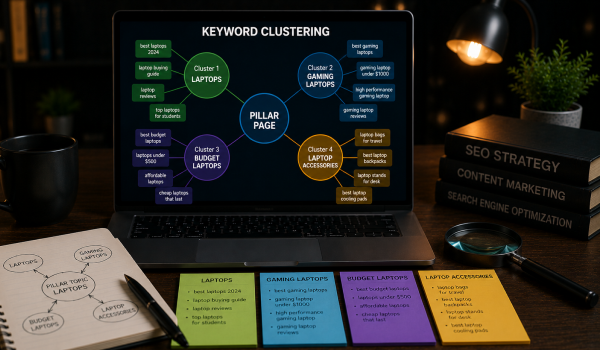
Many SEO beginners create a separate page for every keyword they discover. While this might seem like a good strategy, it often leads to thin content, keyword cannibalization, and poor rankings.
Modern search engines are much smarter than they were in the past. Google understands relationships between keywords, topics, synonyms, and user intent.
This is why keyword clustering has become an essential SEO strategy.
Instead of creating dozens of pages targeting similar keywords, keyword clustering helps you group related search terms and target them within a single comprehensive piece of content.
In this guide, you'll learn What Is Keyword Clustering, why it matters, how it works, and how to build keyword clusters that improve rankings and strengthen topical authority.
Keyword clustering is the process of grouping related keywords that share similar search intent into a single content cluster. Instead of creating separate pages for every keyword, clustered keywords are targeted within one comprehensive page.
Keyword clustering is an SEO technique that organizes related keywords into groups based on shared search intent, semantic relevance, and ranking potential.
For example:
Instead of creating separate pages for:
You would create one comprehensive page targeting all these keywords together.
This approach helps search engines better understand content relevance while improving user experience.
Modern search engines use semantic analysis to understand relationships between keywords. They no longer rely solely on exact keyword matching.
When related keywords are grouped naturally within a page, search engines gain a clearer understanding of the topic being covered.
Keyword clusters strengthen topical relevance because multiple related terms reinforce the same subject matter. This can improve rankings across a wider range of search queries.
Keyword cannibalization occurs when multiple pages target very similar keywords. This can confuse search engines and dilute ranking signals.
Clustering related keywords into one page reduces this risk and helps consolidate authority.
Instead of spreading information across multiple weak pages, keyword clustering helps create comprehensive resources that better satisfy search intent.
Keyword clustering provides structure to your content strategy. Rather than managing hundreds of isolated keywords, you can organize them into logical topic groups.
This makes content planning and publishing more efficient.
The process begins with keyword research.
Example keyword list:
These keywords are related and often share similar intent.
Keywords should only be grouped if they satisfy similar user goals.
If users expect different content types, separate pages may still be required.
Keywords that address the same topic and intent should be grouped together.
Example:
| Primary Keyword | Supporting Keywords |
| SEO Guide | SEO Tutorial |
| SEO Guide | SEO Basics |
| SEO Guide | Learn SEO |
| SEO Guide | SEO for Beginners |
These keywords can often be targeted within a single page.
Semantic clusters contain keywords that are closely related in meaning.
Example:
These keywords describe similar concepts and can often be covered together.
Intent clusters group keywords based on the objective behind the search.
Example:
All these searches indicate commercial investigation intent.
Topic clusters organize content around a central theme.
Example:
| Topic Cluster | Related Keywords |
| Keyword Research | Keyword Difficulty |
| Keyword Research | Search Volume |
| Keyword Research | Long-Tail Keywords |
These keywords support the same overarching topic.
Start by gathering keywords from:
The goal is to create a comprehensive keyword database.
Review search results for each keyword.
Ask:
Keywords with matching intent often belong in the same cluster.
Create groups of keywords that share common themes and objectives.
Example:
| Cluster | Keywords |
| SEO Basics | SEO Guide |
| SEO Basics | Learn SEO |
| SEO Basics | SEO Tutorial |
Each cluster should have one primary keyword.
The primary keyword is usually:
Supporting keywords naturally reinforce the topic.
Instead of targeting keywords individually, create content that addresses all related keywords within the cluster.
This improves content depth and ranking potential.
Keyword Research
Instead of five separate articles, one comprehensive guide can target all these keywords.
Many people confuse these two concepts.
| Factor | Keyword Clustering | Keyword Mapping |
| Purpose | Group Keywords | Assign Keywords |
| Focus | Keyword Organization | Page Optimization |
| Output | Keyword Groups | URL Assignments |
| Stage | Planning | Implementation |
| SEO Benefit | Topic Relevance | Site Structure |
Keyword clustering comes first. Once keywords are grouped, keyword mapping assigns each cluster to a specific page.
A well-optimized cluster page can rank for dozens or even hundreds of related search queries.
Covering related topics comprehensively helps establish authority within a niche.
Instead of publishing multiple similar articles, one strong resource can target an entire keyword cluster.
Keywords should only be clustered when they share search intent and topical relevance.
Similar wording does not always mean similar intent. Always review search results before clustering keywords.
This often leads to keyword cannibalization and weaker rankings.
Each cluster needs a clear focus keyword to guide optimization efforts.
| Step | Action |
| 1 | Build Keyword List |
| 2 | Analyze Intent |
| 3 | Group Similar Keywords |
| 4 | Create Clusters |
| 5 | Select Primary Keyword |
| 6 | Map Keywords to Pages |
| 7 | Create Content |
| 8 | Monitor Rankings |
Keyword clustering is the process of grouping related keywords with similar search intent into a single content cluster to improve rankings and topical relevance.
Keyword clustering helps improve SEO by organizing keywords efficiently, preventing keyword cannibalization, and strengthening topical authority.
Start with keyword research, analyze search intent, group related keywords, choose a primary keyword, and create comprehensive content around the cluster.
Keyword clustering groups related keywords, while keyword mapping assigns those keyword groups to specific pages on a website.
Yes. Proper keyword clustering helps pages rank for multiple related search queries while improving topical relevance and content quality.
Understanding What Is Keyword Clustering is essential for modern SEO success.
Instead of creating separate pages for every keyword variation, keyword clustering allows you to group related terms and build comprehensive content that satisfies user intent. This approach improves rankings, strengthens topical authority, and prevents keyword cannibalization.
By combining keyword research, search intent analysis, and content planning, keyword clustering helps create a more scalable and effective SEO strategy.
As search engines continue to prioritize topic relevance over exact keyword matching, keyword clustering will remain a core component of successful SEO campaigns.






What's Going down i'm new to this, I stumbled upon this I've discovered It positively useful and it
has helped me out loads. I hope to give a contribution & help
other users like its helped me. Good job.