
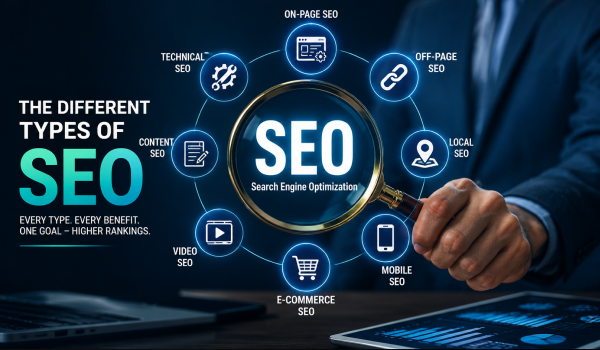
If you're new to search engine optimization, you may be wondering: What Are the Different Types of SEO? SEO is not a single activity but a collection of strategies designed to improve a website's visibility in search engines.
Many beginners focus only on keywords and content, but successful SEO involves much more. Search engines evaluate website quality, user experience, authority, technical performance, and relevance before deciding where a page should rank.
That's why SEO is commonly divided into multiple categories, each serving a specific purpose. From optimizing content and earning backlinks to improving website speed and local visibility, every type of SEO contributes to overall search performance.
In this guide, you'll learn the most important SEO types, how they work, and why each one matters for long-term success.
SEO has evolved significantly over the years. Search engines no longer rank websites based solely on keywords. They now evaluate content quality, technical performance, authority signals, user experience, and relevance.
To make optimization easier to understand and manage, SEO is divided into different categories. Each category focuses on a particular aspect of search performance. When combined, these SEO types create a comprehensive strategy that improves overall website visibility.
On-Page SEO refers to optimizing elements directly on your website to improve search engine rankings. This includes content, headings, title tags, meta descriptions, internal links, and keyword placement. The goal is to help search engines understand your content while providing value to users. Strong On-Page SEO improves relevance and user engagement.
Search engines rely on page content to determine whether a page matches a user's search query. Well-optimized content improves visibility and increases the chances of ranking higher. It also enhances user experience by making content easier to read and navigate. Without proper On-Page SEO, even high-quality content may struggle to rank.
Important On-Page SEO factors include keyword optimization, title tags, meta descriptions, header tags, image optimization, and internal linking. These elements work together to improve content relevance and accessibility. Regular optimization ensures pages remain competitive in search results.
Off-Page SEO refers to activities performed outside your website that influence rankings. The most important component is link building, where other websites link back to your content. Search engines view quality backlinks as trust signals. The stronger your backlink profile, the greater your potential authority.
Search engines use backlinks and brand mentions to evaluate website credibility. Websites with strong authority often rank higher than competitors with weaker reputations. Off-Page SEO helps build trust, improve visibility, and strengthen your website's position within its industry.
Popular Off-Page SEO tactics include link building, guest posting, digital PR, influencer outreach, and brand mentions. These activities help increase website authority and improve search engine trust signals over time.
Technical SEO focuses on improving the backend structure and performance of a website. It ensures that search engines can crawl, index, and understand pages effectively. Technical SEO covers site speed, XML sitemaps, structured data, security, and website architecture. A technically optimized website creates a strong foundation for all other SEO efforts.
Even great content may not rank if search engines cannot properly access or understand it. Technical SEO eliminates barriers that prevent indexing and improves website performance. Better technical optimization also enhances user experience, which is increasingly important for rankings.
Important technical factors include page speed, mobile-friendliness, HTTPS security, schema markup, crawlability, and Core Web Vitals. Regular audits help identify and fix technical issues before they impact rankings.
Local SEO focuses on improving visibility for location-based searches. It helps businesses appear in local search results, map listings, and "near me" searches. Local SEO is especially important for restaurants, clinics, law firms, and service-based businesses.
Many consumers search for products and services in their local area. Strong Local SEO helps businesses attract nearby customers who are ready to take action. Optimizing for local searches can significantly increase foot traffic, calls, and leads.
Effective Local SEO includes optimizing business profiles, managing reviews, building local citations, and creating location-specific content. Consistent business information across directories also improves local search performance.
Ecommerce SEO focuses on optimizing online stores and product pages for search engines. It helps ecommerce businesses attract potential buyers through organic search. Product descriptions, category pages, and shopping-related keywords play a major role in Ecommerce SEO.
Online stores often compete in highly competitive markets. Effective Ecommerce SEO improves product visibility, increases traffic, and drives sales without relying entirely on paid advertising. It can significantly reduce customer acquisition costs over time.
Important factors include product page optimization, category page structure, customer reviews, image optimization, and schema markup. These elements improve visibility and help shoppers find products more easily.
Mobile SEO focuses on optimizing websites for smartphones and tablets. Since Google primarily uses mobile-first indexing, mobile performance directly impacts rankings. Mobile SEO ensures that users have a seamless experience across all devices.
A large percentage of searches now occur on mobile devices. Poor mobile experiences can increase bounce rates and reduce engagement. Mobile optimization helps improve usability, rankings, and conversion rates.
Best practices include responsive design, fast loading times, mobile-friendly navigation, readable text, and optimized images. Regular testing ensures websites perform well on different screen sizes.
International SEO helps websites target users in different countries and languages. It ensures that search engines display the correct version of a website to the appropriate audience. This is particularly important for global businesses.
Without proper international targeting, users may see the wrong language or regional content. International SEO improves relevance and creates a better user experience for global audiences.
Important tactics include hreflang implementation, country-specific domains, multilingual content, and regional keyword research. These strategies help search engines understand geographic targeting.
| SEO Type | Main Focus | Primary Goal |
| On-Page SEO | Content & Page Optimization | Improve Relevance |
| Off-Page SEO | Backlinks & Authority | Build Trust |
| Technical SEO | Website Infrastructure | Improve Crawlability |
| Local SEO | Local Searches | Attract Nearby Customers |
| Ecommerce SEO | Product & Category Pages | Increase Sales |
| Mobile SEO | Mobile User Experience | Improve Mobile Rankings |
| International SEO | Global Targeting | Reach International Audiences |
There is no single "most important" SEO type. A website needs strong content, technical performance, authority, and user experience to compete effectively. Ignoring one category can weaken overall SEO performance.
For most websites, Technical SEO and On-Page SEO provide the foundation for success. Once these areas are optimized, businesses can focus on Off-Page SEO, Local SEO, and advanced strategies to expand visibility and authority.
The main types of SEO are On-Page SEO, Off-Page SEO, Technical SEO, Local SEO, Ecommerce SEO, Mobile SEO, and International SEO. Each focuses on a different aspect of website optimization.
All SEO types are important because they work together. However, On-Page SEO and Technical SEO are often considered the foundation of a successful SEO strategy.
Yes. Local SEO focuses specifically on location-based searches and helping businesses attract nearby customers through maps, local listings, and regional content.
Technical SEO improves the backend structure of a website so search engines can crawl, index, and understand content more effectively.
It is possible in low-competition niches, but strong backlinks and authority signals are often necessary to compete for highly competitive keywords.
Understanding the Different Types of SEO is essential for building a successful search strategy. SEO is much more than keyword optimization—it includes content quality, technical performance, authority building, local visibility, and user experience.
Each SEO category serves a unique purpose, but they work best when implemented together. On-Page SEO improves relevance, Off-Page SEO builds authority, Technical SEO ensures search engines can access your content, and specialized strategies such as Local SEO and Ecommerce SEO help target specific audiences.
If you're serious about improving rankings and driving sustainable organic traffic, focus on developing a balanced SEO strategy that incorporates all major SEO types rather than relying on a single approach.