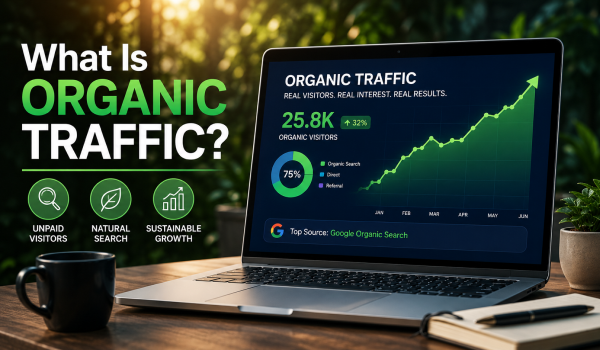
If you've ever reviewed website analytics, you've probably come across the term organic traffic. But what does it actually mean, and why is it so important for SEO?
Simply put, organic traffic refers to visitors who arrive at your website through unpaid search engine results. Instead of clicking on advertisements, these users find your content naturally when searching for information, products, or services online.
Organic traffic is often considered one of the most valuable traffic sources because it attracts users who are actively looking for what you offer. Unlike paid advertising, organic traffic doesn't require you to pay for every click, making it a sustainable long-term growth strategy.
In this guide, you'll learn What Is Organic Traffic, how it works, why it matters, and the best ways to increase it through SEO.
Organic traffic refers to visitors who land on your website through unpaid search engine results. These visitors find your website naturally by searching for relevant keywords on search engines like Google, rather than clicking on paid advertisements.
Organic traffic is the traffic your website receives from search engine results pages (SERPs) without paying for advertisements. When users type a query into Google and click on a non-sponsored result, that visit is classified as organic traffic.
For example, if someone searches for "best SEO tools" and clicks on your blog post because it appears in Google's organic results, that visit counts as organic traffic. This type of traffic is generated through effective SEO practices rather than advertising budgets.
Search engines continuously scan websites to discover new content. This process is known as crawling. Once content is discovered, search engines analyze and store it in their index. Pages that are properly indexed become eligible to appear in search results when users search for related topics.
When a user enters a search query, search engines evaluate thousands of pages to determine which results are most relevant. Factors such as content quality, backlinks, page speed, and user experience influence rankings. Higher-ranking pages generally receive more clicks and organic traffic.
After search engines display results, users choose which pages to visit. Websites with compelling titles, useful content, and strong rankings tend to attract more clicks. These visits are recorded as organic traffic because they originate from unpaid search results.
Organic traffic often consists of users actively searching for specific information, products, or services. Because these visitors have clear intent, they are more likely to engage with content and take meaningful actions. This makes organic traffic highly valuable for businesses and publishers.
Unlike paid advertising, organic traffic does not require payment for each click. While SEO requires time and effort, successful rankings can generate traffic for months or even years. This makes organic traffic a cost-effective long-term strategy.
Many users trust organic search results more than paid advertisements. Appearing prominently in organic rankings signals authority and relevance. Over time, strong organic visibility can strengthen brand recognition and customer trust.
| Factor | Organic Traffic | Paid Traffic |
| Source | Unpaid Search Results | Paid Advertisements |
| Cost Per Click | Free | Paid |
| Sustainability | Long-Term | Ends When Budget Stops |
| Trust Level | Usually Higher | Varies |
| Results Speed | Slow to Build | Immediate |
| ROI Potential | High Over Time | Depends on Budget |
| SEO Required | Yes | No |
| Long-Term Value | Excellent | Limited |
Organic traffic continues generating visitors long after content is published. A well-optimized page can attract traffic for years without ongoing advertising expenses. This creates a compounding effect that supports long-term business growth.
Although SEO requires upfront effort, the long-term cost per visitor is often lower than paid advertising. As rankings improve, businesses can receive consistent traffic without continuously increasing marketing budgets.
Users who arrive through organic search are often actively looking for solutions. This intent-driven behavior can result in better engagement, higher conversion rates, and stronger customer relationships.
Publishing useful, informative, and original content is one of the most effective ways to attract organic traffic. Search engines prioritize content that satisfies user intent and provides value. Consistently updating content can further improve performance.
Keyword research helps identify the terms your audience is searching for. Optimizing content around these keywords increases the likelihood of appearing in relevant search results. Focus on user intent rather than keyword stuffing.
On-page SEO includes optimizing titles, headings, meta descriptions, images, and internal links. These elements help search engines understand your content and improve user experience. Strong on-page optimization can boost rankings and traffic.
Backlinks from authoritative websites signal trust and credibility. Earning high-quality backlinks can improve rankings and increase organic visibility. Focus on creating valuable content that others naturally want to reference.
Technical SEO ensures search engines can crawl and index your website effectively. Improving page speed, mobile-friendliness, security, and site structure helps create a better experience for both users and search engines.
Many websites focus on keywords without understanding what users actually want. Content that fails to satisfy search intent often struggles to rank and retain visitors. Always create content that directly addresses user needs.
Short, low-value content provides limited benefit to users. Search engines increasingly prioritize comprehensive content that answers questions thoroughly. Thin content can limit ranking potential.
Technical issues such as slow loading times, broken links, and indexing problems can negatively impact rankings. Regular audits help identify and fix these issues before they affect organic traffic.
Organic traffic in SEO refers to visitors who arrive at a website through unpaid search engine results. These users find content naturally through search queries rather than paid advertisements.
Organic traffic comes from non-sponsored search results, while paid traffic comes from advertisements. Organic traffic requires SEO efforts, whereas paid traffic depends on advertising budgets.
Organic traffic is important because it delivers targeted visitors, builds credibility, and provides sustainable long-term growth without requiring payment for every click.
The timeline varies depending on competition, content quality, and SEO efforts. Many websites begin seeing noticeable improvements within three to six months.
Yes. Organic traffic helps small businesses attract potential customers without relying entirely on paid advertising. It is often one of the most cost-effective marketing strategies available.
Understanding What Is Organic Traffic is fundamental for anyone interested in SEO and digital marketing. Organic traffic represents visitors who discover your website through unpaid search engine results, making it one of the most sustainable and cost-effective traffic sources available.
Unlike paid advertising, organic traffic continues to deliver value long after content is published. By focusing on high-quality content, keyword optimization, technical SEO, and link building, businesses can steadily increase their visibility and attract more qualified visitors.
If your goal is long-term growth, improved credibility, and a better return on investment, investing in organic traffic should be a key part of your overall SEO strategy.