

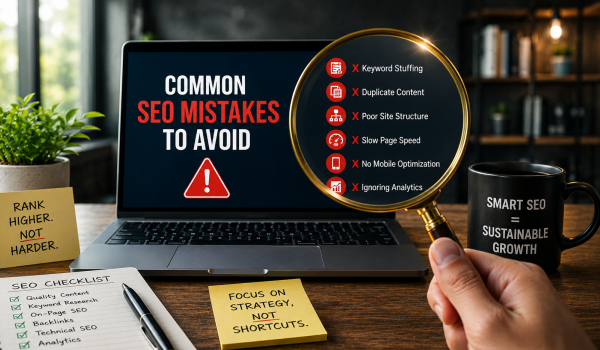
Many websites struggle to rank on Google despite investing time and effort into SEO. In many cases, the problem isn't a lack of optimization—it's the presence of avoidable SEO mistakes.
Search engines continuously evaluate websites based on content quality, user experience, technical performance, and relevance. Even a few common errors can reduce visibility, limit traffic, and negatively impact rankings.
The good news is that most SEO mistakes are easy to identify and fix once you know what to look for. By avoiding these issues, you can improve your website's performance and create a better experience for users.
In this guide, you'll discover the most important Common SEO Mistakes to Avoid, why they matter, and how to correct them effectively.
The most common SEO mistakes include keyword stuffing, ignoring search intent, publishing thin content, neglecting technical SEO, failing to optimize for mobile devices, and not building quality backlinks. Avoiding these mistakes can significantly improve rankings, traffic, and user experience.
SEO mistakes can prevent search engines from understanding, indexing, and ranking your content properly. Even high-quality content may struggle to perform if technical issues or optimization errors exist.
In addition, many SEO mistakes negatively affect user experience. Since Google increasingly prioritizes user satisfaction, websites that provide poor experiences often see lower rankings and reduced organic traffic.
Many websites target keywords without understanding what users actually want. If your content doesn't match search intent, visitors are likely to leave quickly. This reduces engagement and limits ranking potential.
Analyze the top-ranking pages for your target keyword. Identify whether users expect a guide, product page, comparison article, or another format. Then create content that matches those expectations.
Keyword stuffing occurs when keywords are repeated excessively in an attempt to manipulate rankings. This makes content difficult to read and can harm user experience. Modern search engines prioritize natural language over keyword repetition.
Use keywords naturally throughout your content. Focus on providing value and addressing user needs instead of forcing keywords into every sentence.
Thin content provides limited value and often fails to answer user questions completely. Search engines prefer comprehensive content that satisfies search intent. Short, low-quality pages rarely perform well in competitive search results.
Expand content with detailed explanations, examples, FAQs, and actionable insights. Aim to create content that fully addresses the topic rather than covering it superficially.
Title tags help search engines understand page content and influence click-through rates. Poorly optimized titles can reduce visibility and discourage users from clicking your result.
Create clear, descriptive titles that include target keywords naturally. Focus on relevance and user interest rather than excessive optimization.
Meta descriptions may not directly affect rankings, but they influence click-through rates. Missing or weak descriptions can reduce the number of users who visit your page.
Write compelling meta descriptions that summarize content and encourage clicks. Include primary keywords where appropriate.
Internal links help search engines discover content and understand site structure. Without proper internal linking, valuable pages may receive less visibility and authority.
Link related pages together naturally. Use descriptive anchor text and ensure important pages are easy to access from other sections of your website.
Most searches now occur on mobile devices. A website that performs poorly on smartphones can create a frustrating experience and negatively impact rankings.
Use responsive design, optimize images, and test your website on multiple devices. Ensure content is easy to read and navigate on smaller screens.
Slow websites increase bounce rates and reduce user satisfaction. Search engines consider page speed an important ranking factor because it directly affects user experience.
Compress images, minimize code, enable caching, and use reliable hosting. Regular performance audits can help identify speed-related issues.
HTTPS protects user data and builds trust. Websites without HTTPS may appear less secure to both users and search engines.
Install an SSL certificate and ensure all pages use HTTPS. Redirect old HTTP URLs to secure versions.
Duplicate content can confuse search engines and make it difficult to determine which page should rank. This can dilute ranking signals and reduce visibility.
Create original content and use canonical tags when necessary. Regularly audit your website for duplicate pages.
Large image files can slow websites, while missing ALT text reduces accessibility and image search visibility. Poor image optimization can negatively impact both SEO and user experience.
Compress images, use descriptive filenames, and add relevant ALT text. Optimized images improve performance and accessibility.
Complex or unclear URLs can make content harder for users and search engines to understand. Well-structured URLs improve usability and relevance.
Use short, descriptive URLs that include relevant keywords. Avoid unnecessary numbers, symbols, and parameters whenever possible.
Technical issues such as crawl errors, broken links, and indexing problems can prevent search engines from accessing your content properly.
Perform regular technical audits and monitor website health through tools like Google Search Console. Fix issues as soon as they are identified.
Not all backlinks are beneficial. Links from spammy or irrelevant websites can harm credibility and potentially lead to ranking issues.
Focus on earning backlinks from reputable and relevant websites. Quality matters far more than quantity in modern SEO.
Many beginners abandon SEO because they expect immediate rankings. SEO is a long-term process that requires consistency and patience.
Set realistic expectations and focus on continuous improvement. Track progress over months rather than days or weeks.
| SEO Task | Status |
| Match Search Intent | ✅ |
| Avoid Keyword Stuffing | ✅ |
| Publish Comprehensive Content | ✅ |
| Optimize Title Tags | ✅ |
| Write Meta Descriptions | ✅ |
| Build Internal Links | ✅ |
| Ensure Mobile Friendliness | ✅ |
| Improve Page Speed | ✅ |
| Use HTTPS | ✅ |
| Optimize Images | ✅ |
| Monitor Technical SEO | ✅ |
| Build Quality Backlinks | ✅ |
Some of the most common SEO mistakes include keyword stuffing, ignoring search intent, publishing thin content, neglecting technical SEO, and failing to optimize for mobile users.
Yes. SEO mistakes can reduce visibility, prevent proper indexing, and create poor user experiences, all of which can negatively affect rankings.
Most websites should perform a comprehensive SEO audit every three to six months. Larger websites may benefit from more frequent audits.
Duplicate content can confuse search engines and dilute ranking signals. Creating unique content is generally the best approach.
The recovery timeline varies depending on the issue. Some fixes show results within weeks, while others may take several months to influence rankings.
Avoiding Common SEO Mistakes to Avoid is one of the fastest ways to improve your website's search performance. Many ranking issues are caused not by a lack of effort but by simple errors that reduce visibility and create poor user experiences.
By focusing on search intent, creating valuable content, improving technical performance, optimizing for mobile devices, and building quality backlinks, you can strengthen your SEO foundation and increase organic traffic over time.
Remember that SEO is an ongoing process. Regular audits, continuous learning, and consistent optimization will help you avoid costly mistakes and achieve long-term success in search engines.