

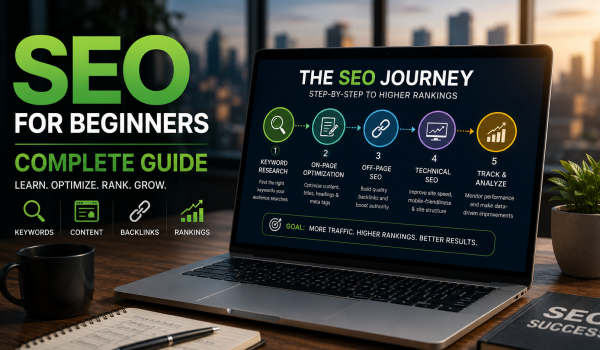
If you're launching a website, blog, or online business, you've probably heard the term SEO. But for many beginners, SEO can seem confusing, technical, and overwhelming.
The good news is that SEO doesn't require advanced programming skills or years of experience to understand. At its core, SEO is about helping search engines understand your content and making it easier for users to find your website.
When done correctly, SEO can increase your visibility on Google, drive targeted organic traffic, and generate leads or sales without relying entirely on paid advertising.
This SEO for Beginners guide will walk you through everything you need to know, from how search engines work to keyword research, content optimization, technical SEO, and link building.
SEO (Search Engine Optimization) is the process of improving a website's visibility in search engine results. The goal is to attract more organic traffic by creating valuable content, optimizing website structure, and building authority through SEO best practices.
SEO stands for Search Engine Optimization. It is the practice of improving a website so that search engines like Google can understand, index, and rank its content more effectively. The higher a page ranks, the more likely users are to visit it.
SEO involves content creation, keyword optimization, technical improvements, user experience enhancements, and authority building. Together, these elements help websites attract relevant organic traffic.
SEO helps websites appear in search results when users are looking for relevant information, products, or services. Higher rankings often lead to more clicks and visitors. Unlike paid advertising, organic traffic can continue growing over time without paying for every visit.
Users often trust websites that appear on the first page of Google. Strong SEO signals quality, authority, and relevance. Over time, better visibility can strengthen brand reputation and customer confidence.
SEO is a long-term investment that can generate traffic for months or even years. Unlike paid campaigns that stop when budgets end, successful SEO continues delivering value long after content is published.
Search engines use automated bots called crawlers to find webpages across the internet. These bots follow links from page to page and collect information about content. If a page cannot be crawled, it may not appear in search results.
After discovering content, search engines analyze and store it in a massive database called an index. Indexed pages become eligible to appear in search results. Proper indexing is essential for SEO success.
When someone performs a search, Google evaluates indexed pages and ranks them based on relevance and quality. Hundreds of factors influence rankings, including content quality, backlinks, page speed, and user experience.
On-Page SEO focuses on improving content, titles, headings, images, and internal links. These elements help search engines understand page topics and improve user experience. Strong On-Page SEO increases relevance for target keywords.
Off-Page SEO involves activities outside your website, primarily link building. Quality backlinks from trusted websites act as recommendations and help improve credibility. Strong authority often leads to better rankings.
Technical SEO ensures that search engines can crawl, index, and understand your website efficiently. It includes page speed optimization, mobile-friendliness, security, and site architecture improvements.
Keywords are the words and phrases users enter into search engines. They connect user searches with relevant content. Effective keyword targeting helps attract visitors who are genuinely interested in your content.
Keyword research helps identify topics your audience is actively searching for. By targeting relevant keywords, you can create content that aligns with user needs and improves ranking opportunities.
Some keywords have high search volume but intense competition. Beginners often benefit from targeting long-tail keywords because they are easier to rank for and often have clearer search intent.
Informational searches occur when users want to learn something. These queries often include words like "what," "how," and "guide." Blog posts and tutorials are ideal for this intent.
Commercial searches occur when users are researching products or services before making a purchase. Comparison articles and reviews often perform well for these keywords.
Transactional searches indicate that users want to buy, subscribe, or complete an action. Product pages and landing pages are typically the best content formats for this intent.
Title tags are one of the most important ranking elements. They should clearly describe page content and include target keywords naturally. Strong titles improve both rankings and click-through rates.
Headings organize content and make it easier to read. They also help search engines understand page structure. Well-organized content improves user experience and SEO performance.
Images should include descriptive ALT text and optimized file sizes. Proper image optimization improves accessibility, page speed, and search visibility.
Fast-loading websites provide a better experience for users and often perform better in search results. Compressing images, reducing unnecessary scripts, and using caching can improve speed.
Most searches now happen on mobile devices. Responsive design ensures websites display correctly on different screen sizes. Mobile-friendly websites are essential for modern SEO.
HTTPS encrypts data between users and websites. Secure websites build trust and are preferred by search engines. Every modern website should use HTTPS.
Backlinks are links from other websites pointing to your content. Search engines view quality backlinks as signals of trust and authority. More high-quality backlinks often improve ranking potential.
The best way to earn backlinks is by publishing useful, original content that others want to reference. Guides, research studies, and in-depth resources often attract links naturally.
Overusing keywords can make content difficult to read and may harm rankings. Modern SEO prioritizes natural language and user experience over excessive keyword usage.
Creating content that doesn't match user expectations often leads to poor rankings and engagement. Understanding intent is critical for SEO success.
Even great content can struggle if technical issues prevent search engines from accessing it properly. Regular technical audits help maintain website performance.
| SEO Task | Status |
| Perform Keyword Research | ✅ |
| Understand Search Intent | ✅ |
| Optimize Title Tags | ✅ |
| Use Proper Headings | ✅ |
| Improve Page Speed | ✅ |
| Make Website Mobile-Friendly | ✅ |
| Create High-Quality Content | ✅ |
| Build Internal Links | ✅ |
| Earn Backlinks | ✅ |
| Monitor Performance | ✅ |
SEO for beginners refers to learning the fundamentals of search engine optimization, including keyword research, content creation, technical SEO, and link building.
Most beginners can understand basic SEO concepts within a few weeks. However, mastering SEO often requires continuous learning and practical experience.
Yes. Many free tools, including Google Search Console and Google Keyword Planner, can help beginners learn and implement SEO effectively.
SEO typically takes three to six months to show noticeable improvements, depending on competition and website authority.
Absolutely. SEO remains one of the most effective digital marketing channels for generating sustainable organic traffic and long-term business growth.
Learning SEO may seem overwhelming at first, but the fundamentals are easier to understand than many beginners expect. By focusing on keyword research, search intent, content quality, technical optimization, and link building, you can build a strong foundation for long-term success.
This SEO for Beginners guide covers the essential concepts you need to start improving search visibility and attracting organic traffic. Rather than trying to master everything at once, focus on implementing one SEO principle at a time and continuously refining your strategy.
SEO is a long-term investment, but the rewards can be significant. With patience, consistency, and a commitment to helping users, you can achieve sustainable growth and stronger search engine rankings.