
SEO has entered a new era.
For years, ranking higher on Google primarily meant optimizing keywords, building backlinks, and creating quality content. While those fundamentals still matter, SEO Trends for 2026 reveal a dramatic shift toward AI-powered search experiences.
Google's AI Overviews, AI-powered search interfaces, and conversational search experiences are changing how users find information and interact with search results. Industry studies are already reporting declining click-through rates for some informational searches as users increasingly receive answers directly within search results.
However, this doesn't mean SEO is dying. Instead, SEO is evolving. Success in 2026 requires focusing on authority, trust, topical expertise, brand visibility, and becoming a source that AI systems choose to cite.
This guide explores the most important SEO trends shaping 2026 and explains how you can adapt your strategy to remain visible in both traditional and AI-powered search environments.
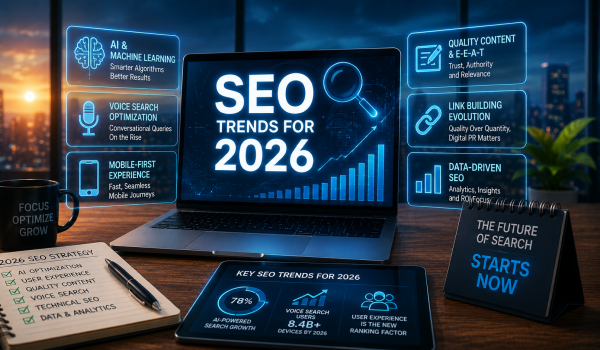
The biggest SEO Trends for 2026 include AI-powered search, Google AI Overviews, Generative Engine Optimization (GEO), stronger E-E-A-T requirements, topical authority, brand visibility, zero-click searches, and multi-platform search optimization. SEO is shifting from simply ranking pages to becoming a trusted source that AI systems reference and recommend.
Search engines are no longer just displaying lists of links. Google's AI-powered search experiences increasingly generate direct answers, summaries, and conversational interactions. This changes how users discover content and how websites earn visibility.
As a result, SEO professionals must think beyond rankings alone. Visibility, citations, authority, and brand mentions are becoming increasingly important metrics alongside traditional traffic and keyword rankings.
Google continues integrating AI directly into search through AI Overviews and conversational search experiences. Instead of browsing multiple pages, users increasingly receive synthesized answers immediately. This means websites must optimize not only for rankings but also for AI citations and visibility within generated responses. Studies show AI-generated search experiences are becoming a core part of modern search behavior.
AI Overviews are changing how users interact with search results. Some studies indicate reduced click-through rates for informational queries because users receive answers directly on the results page. However, being cited inside AI-generated summaries can still increase brand awareness and influence purchasing decisions. SEO professionals must focus on becoming trusted sources rather than relying solely on clicks.
Generative Engine Optimization (GEO) refers to optimizing content so AI systems can easily understand, cite, and reference it. Instead of focusing only on ranking positions, marketers are increasingly optimizing for mentions within AI-generated answers. GEO is rapidly becoming an extension of traditional SEO as AI search adoption grows.
Google continues emphasizing Experience, Expertise, Authoritativeness, and Trustworthiness (E-E-A-T). As AI-generated content becomes widespread, search engines increasingly prioritize content created by credible experts with real-world experience. Strong author profiles, case studies, citations, and original insights will become even more valuable.
Instead of optimizing isolated pages for individual keywords, successful websites are building complete topic clusters. Search engines increasingly evaluate overall expertise on a subject rather than single-page optimization. Covering related subtopics comprehensively helps establish authority and improves long-term visibility.
AI-powered search encourages users to ask detailed, conversational questions instead of short keyword phrases. As search queries become longer and more specific, content must answer complex questions naturally and comprehensively. Optimizing for conversational search will become increasingly important.
Many users now receive answers directly within search results. This reduces clicks but increases the importance of brand visibility. Businesses should measure success using additional metrics such as citations, mentions, and overall search presence rather than traffic alone.
AI systems frequently rely on trusted and recognizable sources. Consistent branding, expert content, positive reputation signals, and mentions across multiple platforms can improve visibility. Building a recognizable brand is becoming a critical SEO strategy.
Users increasingly discover information through YouTube, Reddit, TikTok, AI assistants, and other platforms. Successful SEO strategies now involve creating content that can be discovered across multiple channels. Visibility across the web strengthens overall authority and AI recognition.
Despite AI advancements, technical SEO remains a core requirement. Fast-loading pages, mobile optimization, crawlability, structured data, and website security continue to influence visibility. AI systems still depend on accessible and well-structured content.
AI can generate average content quickly, making originality more valuable than ever. Original research, first-hand experience, expert opinions, and unique data help differentiate content from AI-generated summaries. These assets also increase the likelihood of being cited by AI systems.
AI tools are helping marketers perform keyword research, content planning, optimization, and analysis faster than ever. However, human oversight remains critical for strategy, creativity, and quality control. The future belongs to marketers who combine AI efficiency with human expertise.
| Trend | Impact Level | Why It Matters |
| AI Search | Very High | Changes how users find information |
| Google AI Overviews | Very High | Reduces traditional clicks |
| GEO (Generative Engine Optimization) | High | Improves AI visibility |
| E-E-A-T | High | Builds trust and authority |
| Topical Authority | High | Strengthens expertise signals |
| Conversational Search | Medium-High | Supports natural queries |
| Zero-Click Search | High | Changes traffic expectations |
| Brand Authority | High | Increases AI citations |
| Multi-Platform SEO | Medium-High | Expands visibility |
| Technical SEO | High | Maintains accessibility |
| Original Research | High | Creates competitive advantage |
| AI SEO Tools | Medium-High | Improves efficiency |
Create content based on genuine experience, expertise, and original insights. AI-generated content alone is unlikely to provide a sustainable advantage.
Develop comprehensive content around core topics instead of focusing only on individual keywords. This helps establish topical authority.
Build visibility across multiple channels including blogs, social media, YouTube, and industry communities to improve overall authority.
Structure content clearly, answer questions directly, use credible sources, and provide unique information that AI systems can confidently reference.
The biggest SEO trends include AI search, Google AI Overviews, Generative Engine Optimization (GEO), E-E-A-T, topical authority, zero-click searches, and multi-platform search optimization.
Yes. SEO remains essential, but the focus is shifting from ranking pages alone to building authority, visibility, and AI citations across search ecosystems.
Generative Engine Optimization (GEO) involves optimizing content so AI systems can understand, cite, and reference it within generated answers and summaries.
No. AI is changing how SEO works, but search engines still need authoritative content, trusted sources, and high-quality information. SEO professionals who adapt to AI will remain valuable.
AI Overviews can reduce click-through rates for some informational searches while increasing the importance of citations, authority, and brand visibility.
The biggest SEO Trends for 2026 revolve around one theme: AI-powered search.
Google's AI Overviews, conversational search experiences, and AI-generated answers are changing how users discover information. However, the foundations of SEO—helpful content, expertise, trust, and strong user experiences—remain more important than ever.
The websites that succeed in 2026 won't simply optimize for keywords. They'll build authority, demonstrate expertise, create original content, strengthen brand visibility, and become trusted sources that both users and AI systems rely on.
The future of SEO is not about fighting AI. It's about becoming the source AI chooses to trust and cite.