

Many websites publish content regularly but still struggle to rank on Google. The reason is often simple: they don't have a clear SEO strategy.
SEO is more than optimizing a few keywords or writing blog posts. It requires a structured approach that aligns content, technical optimization, user intent, and authority-building efforts toward specific goals.
Without a strategy, SEO efforts become scattered and inconsistent. You may create content that doesn't target the right audience or miss opportunities that could drive significant traffic and conversions.
In this guide, you'll learn What Is an SEO Strategy, why it's important, and how to build a step-by-step SEO plan that improves rankings, increases organic traffic, and supports long-term growth.
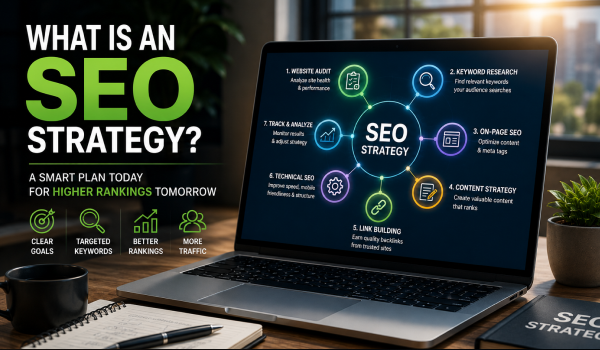
An SEO strategy is a long-term plan designed to improve a website's visibility in search engines. It includes keyword research, content creation, on-page SEO, technical optimization, link building, and performance tracking to increase organic traffic and achieve business goals.
An SEO strategy is a roadmap that outlines how a website will improve its search engine rankings and attract more organic traffic. Instead of performing random optimization tasks, businesses use a strategy to focus on activities that support measurable goals.
A strong SEO strategy aligns content, technical improvements, keyword targeting, and authority-building efforts. It ensures that every optimization activity contributes to better visibility, traffic, and conversions. Without a clear strategy, SEO efforts often become inefficient and difficult to measure.
An SEO strategy helps businesses identify priorities and focus on activities that generate results. Instead of guessing what to optimize next, teams follow a structured roadmap. This improves efficiency and prevents wasted effort.
SEO requires time, content, tools, and expertise. A well-defined strategy helps allocate resources effectively by focusing on the highest-impact opportunities. This ensures that efforts are aligned with business objectives.
Consistent optimization produces better long-term results than occasional SEO efforts. A strategy creates a repeatable process that supports sustainable traffic growth and stronger search visibility over time.
Keyword research helps discover the terms your audience uses when searching online. These keywords form the foundation of your content and optimization efforts. Targeting relevant keywords increases the chances of attracting qualified visitors.
Choosing keywords is not enough; you must also understand why users are searching. Search intent helps determine the type of content users expect to find. Aligning content with intent improves rankings and engagement.
High-quality content is at the core of every successful SEO strategy. Content should answer questions, solve problems, and provide useful information. Valuable content helps attract visitors and encourages them to stay on your website longer.
Search engines favor websites that demonstrate expertise on a subject. Publishing multiple pieces of content around related topics helps establish authority. This can improve rankings across an entire topic cluster.
On-page SEO involves improving titles, headings, meta descriptions, images, and internal links. These elements help search engines understand content and improve user experience. Proper optimization increases relevance and visibility.
User experience influences both engagement and rankings. Easy navigation, readable content, and clear page structures help visitors find information quickly. Better experiences often lead to stronger SEO performance.
Technical SEO ensures that search engines can crawl and index your website effectively. This includes optimizing page speed, fixing errors, and improving website architecture. Strong technical foundations support all other SEO efforts.
Google uses mobile-first indexing, meaning mobile performance directly affects rankings. Ensuring that websites work well on smartphones and tablets improves both usability and search visibility.
Backlinks from authoritative websites signal trust and credibility. Search engines often use backlinks as indicators of quality and relevance. Earning strong backlinks can improve rankings and increase organic traffic.
Link building is not only about rankings. It also helps increase brand visibility and industry recognition. Strong authority makes it easier to compete for competitive keywords.
Start by identifying what you want to achieve. Common goals include increasing traffic, generating leads, improving rankings, or boosting sales. Clear objectives help measure success and guide decision-making.
Use keyword research tools to identify search terms relevant to your audience. Focus on keywords that align with business goals and user intent. Prioritize opportunities with realistic ranking potential.
Develop content that addresses customer questions and challenges. Organize topics into content clusters to improve topical authority. Consistent publishing supports long-term SEO growth.
Ensure that pages are optimized for both users and search engines. Address technical issues, optimize content elements, and improve usability. Regular audits help maintain strong performance.
Monitor rankings, traffic, conversions, and engagement metrics. Analyzing performance data helps identify strengths, weaknesses, and new opportunities. Continuous optimization is essential for sustained growth.
Trying to rank for too many keywords at once can dilute focus. It's often better to concentrate on specific topics and build authority gradually. Strategic targeting typically delivers stronger results.
Many businesses focus only on content while neglecting technical performance. Technical issues can prevent search engines from properly accessing and ranking content. Regular audits help avoid these problems.
SEO is a long-term investment. Rankings and traffic improvements often take months to develop. Patience and consistency are essential for achieving sustainable success.
| SEO Component | Example Action |
| Keyword Research | Target "SEO strategy for small business" |
| Content Creation | Publish detailed SEO guides |
| On-Page SEO | Optimize titles and headings |
| Technical SEO | Improve page speed |
| Link Building | Earn backlinks from industry blogs |
| Performance Tracking | Monitor rankings and traffic |
An SEO strategy is a structured plan designed to improve a website's visibility in search engines through content optimization, keyword targeting, technical SEO, and authority-building activities.
An SEO strategy provides direction, helps prioritize activities, and ensures that optimization efforts align with business goals. It improves efficiency and long-term performance.
A comprehensive SEO strategy should include keyword research, content planning, on-page SEO, technical optimization, link building, and performance tracking.
Most SEO strategies begin showing results within three to six months, although competitive industries may require more time and effort.
Yes. Small businesses can use SEO strategies to increase visibility, attract targeted traffic, and compete effectively without relying solely on paid advertising.
Understanding What Is an SEO Strategy is the first step toward building sustainable search visibility and organic growth. SEO success doesn't happen by accident—it requires a structured plan that combines keyword research, content creation, technical optimization, and authority building.
A well-executed SEO strategy helps businesses focus on the right opportunities, allocate resources effectively, and achieve measurable results over time. Rather than chasing rankings randomly, you create a roadmap that guides every optimization effort.
Whether you're a small business, blogger, or enterprise brand, investing in a clear SEO strategy can help increase traffic, improve rankings, and drive long-term success in search engines.