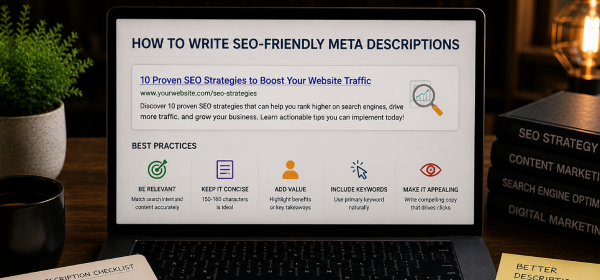
To write SEO-friendly meta descriptions, keep them between 150–160 characters, include your primary keyword naturally, match search intent, explain the page's value, use action-oriented language, and ensure every page has a unique description that encourages clicks.
A high-ranking webpage doesn't always guarantee high traffic. If users aren't convinced to click your result, even the best rankings can deliver disappointing results.
This is where SEO-friendly meta descriptions become important.
A meta description is a short summary displayed beneath your page title in search engine results. While it isn't a direct ranking factor, it significantly influences whether users choose your page over competing results. A compelling description can improve your click-through rate (CTR), increase qualified traffic, and create the right expectations before visitors land on your page.
In this guide, you'll learn how to write SEO-friendly meta descriptions, discover proven writing techniques, review real examples, and understand the common mistakes that prevent pages from attracting clicks.
A meta description is an HTML attribute that provides a brief summary of a webpage's content. It usually appears below the page title in Google Search results and helps users understand what they can expect before clicking.
Although Google may rewrite descriptions depending on the search query, writing optimized meta descriptions gives search engines and users a strong summary of your page.
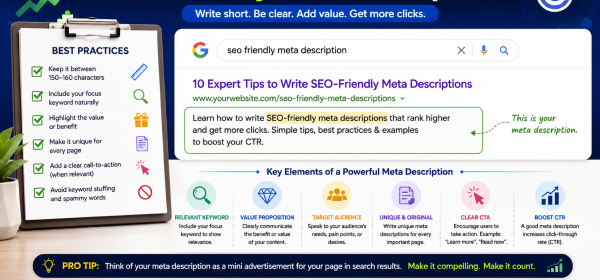
Meta descriptions are commonly displayed in:
A clear and relevant description improves the likelihood of attracting clicks.
A compelling meta description acts like a short advertisement for your webpage. Even if two pages rank side by side, the one with a clearer and more persuasive description often receives more clicks.
Well-written descriptions highlight benefits, answer user intent, and encourage action without being misleading.
Before visiting your website, users want to know whether your page answers their question. A concise description provides context and helps users decide if your content is relevant.
This creates better expectations and often leads to higher engagement after the click.
Meta descriptions are not a direct ranking factor, but a higher click-through rate can improve the overall performance of your pages by attracting more organic visitors.
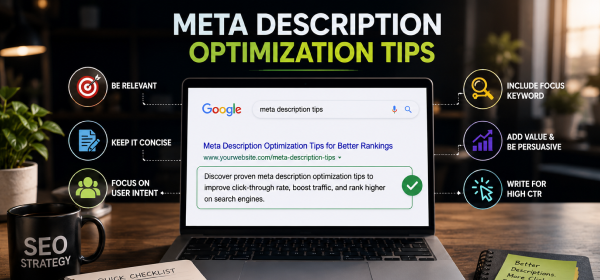
Use your focus keyword once within the description where it fits naturally. Google often highlights matching keywords in bold, making your result more noticeable.
Avoid forcing the keyword or repeating it unnecessarily. The goal is to sound natural while remaining relevant.
Most search engines display approximately 150–160 characters before truncating the description.
A concise description ensures users can read the complete message without important information being cut off.
Your description should reflect what users expect based on their search query.
For example:
| Search Intent | Meta Description Example |
|---|---|
| Informational | Learn what technical SEO is and how it improves website performance. |
| Commercial | Compare the best SEO tools and choose the right solution for your business. |
| Transactional | Explore affordable SEO services designed to improve your website rankings. |
Matching intent improves relevance and encourages more qualified clicks.
Tell users what they will gain by visiting your page.
Instead of simply describing the topic, explain the value.
Examples:
Benefit-driven descriptions often generate higher engagement.
Encourage users to take action with natural calls-to-action such as:
Action-oriented wording creates curiosity and encourages clicks without sounding overly promotional.
Each webpage should have its own unique description.
Duplicate descriptions make it harder for users and search engines to distinguish between pages, especially on larger websites.
| Best Practice | Why It Matters |
|---|---|
| Include the focus keyword | Improves relevance |
| Keep 150–160 characters | Prevents truncation |
| Match search intent | Improves CTR |
| Write unique descriptions | Avoids duplication |
| Highlight user benefits | Encourages clicks |
| Use action-oriented language | Improves engagement |
| Stay accurate | Builds trust |
| Good Example | Poor Example |
|---|---|
| Learn how to write SEO-friendly meta descriptions that improve CTR with proven tips and examples. | Meta description SEO meta description SEO meta description SEO. |
| Discover practical techniques to optimize title tags and meta descriptions for higher rankings. | We provide SEO services, SEO optimization, SEO marketing, SEO solutions. |
| Improve your On-Page SEO using this complete checklist with actionable optimization tips. | Welcome to our website. Click here to learn more. |
The better examples clearly explain the value while naturally including relevant keywords.
Yes, but it should sound natural.
Examples include:
Avoid overly aggressive sales language that doesn't match the content.
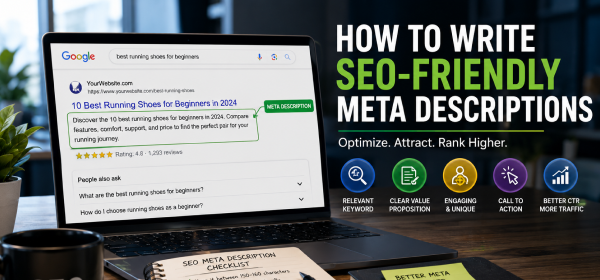
Use Google Search Console to compare impressions and clicks. If a page ranks well but has a low CTR, updating the meta description may improve performance.
Search your target keyword and review the descriptions of competing pages. Identify opportunities to make your description more specific, more compelling, or more benefit-focused.
SEO is an ongoing process. Refresh meta descriptions periodically, especially for pages that receive impressions but relatively few clicks.
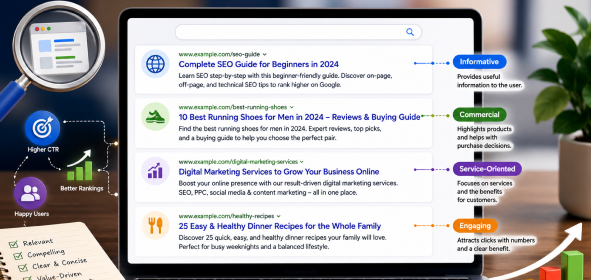
Descriptions exceeding the recommended length may be truncated, causing important information to disappear in search results.
Repeating the same keyword multiple times reduces readability and makes descriptions appear spammy.
Every page should have a unique description that accurately reflects its content.
A description that doesn't match user expectations is less likely to generate clicks.
Avoid clickbait. If users don't find what the description promises, trust and engagement may decline.
| Checklist Item | Status |
|---|---|
| Focus keyword included naturally | ✅ |
| Length between 150–160 characters | ✅ |
| Search intent matched | ✅ |
| User benefit highlighted | ✅ |
| Action-oriented language included | ✅ |
| Unique description written | ✅ |
| No keyword stuffing | ✅ |
| Clear and readable | ✅ |
A meta description is a short HTML summary of a webpage that appears beneath the title in search engine results. It helps users understand what the page is about before clicking.
Meta descriptions are not a direct ranking factor, but they can improve click-through rates, which may positively influence your page's overall search performance.
Aim for 150–160 characters to reduce the chance of truncation while clearly communicating the page's value.
Yes. Unique descriptions help users distinguish between pages and improve the overall quality of your website's search listings.
Yes. Google may display a different snippet if it believes another section of your page better matches the user's search query. Writing accurate, relevant descriptions reduces the likelihood of rewrites.
Learning How to Write SEO-Friendly Meta Descriptions is an important part of improving your On-Page SEO and increasing organic traffic. While meta descriptions don't directly affect rankings, they strongly influence whether users click on your search result.
Focus on writing concise, unique, and benefit-driven descriptions that match search intent, include your primary keyword naturally, and encourage action without exaggeration. Regularly review your meta descriptions in Google Search Console and update underperforming pages to improve click-through rates over time.
A compelling meta description, combined with a strong title tag and valuable content, gives your pages a much better chance of standing out in search results.