
Publishing content without proper optimization is one of the biggest reasons websites fail to rank on Google. Even high-quality articles can struggle if essential SEO elements are missing.
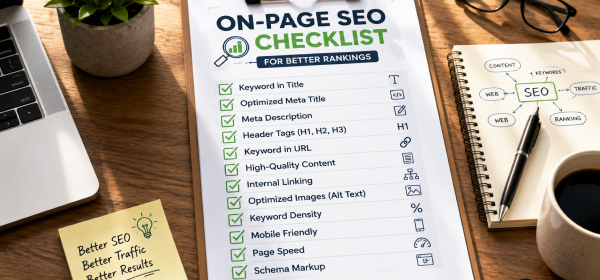
That's why every page should follow a structured On-Page SEO Checklist before it's published.
On-page SEO focuses on everything you can control directly on your website from content and headings to images, URLs, internal links, and page speed. These elements help search engines understand your content while improving the overall user experience.
Whether you're managing a blog, business website, eCommerce store, or portfolio, following a consistent checklist ensures that every page is optimized for both users and search engines.
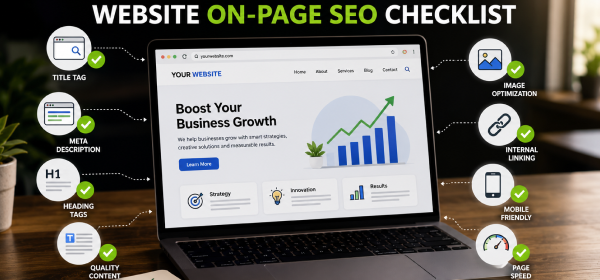
This guide covers 25 proven on-page SEO checks that you should complete before publishing any webpage.
Good On-Page SEO helps search engines understand your content while making your website easier to navigate for visitors. Proper optimization improves rankings, increases click-through rates, reduces bounce rates, and creates a better overall user experience.
Unlike Off-Page SEO, which depends on backlinks and external signals, On-Page SEO gives you complete control over how your pages are optimized.
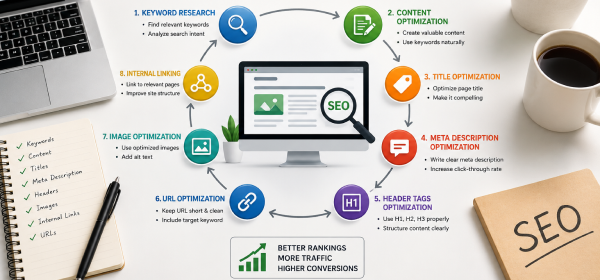
Keyword optimization is the foundation of every SEO-friendly webpage. Instead of stuffing keywords into your content, focus on natural placement and search intent.
| Task | Status |
|---|---|
| Choose one primary keyword | ✅ |
| Research supporting keywords | ✅ |
| Match search intent | ✅ |
| Place keyword in H1 | ✅ |
| Add keyword in first 100 words | ✅ |
| Include keyword in one H2 | ✅ |
| Use keyword naturally throughout content | ✅ |
| Avoid keyword stuffing | ✅ |
High-quality content remains Google's most important ranking factor. Your content should answer the user's question completely while providing useful and accurate information.
| Element | Recommended |
|---|---|
| Original Content | ✅ |
| Helpful Information | ✅ |
| Search Intent Match | ✅ |
| Updated Information | ✅ |
| Easy Readability | ✅ |
Proper headings help users scan your content while giving search engines a clear understanding of page structure.
A good URL should be:
Good Example
example.com/on-page-seo-checklist
Poor Example
example.com/post?id=45893
Your title tag and meta description influence how your page appears in search results.
Images improve engagement but can slow down your website if not optimized.
| Task | Status |
|---|---|
| Compress images | ✅ |
| Use WebP format | ✅ |
| Add descriptive ALT text | ✅ |
| Use keyword in selected ALT text | ✅ |
| Rename image files | ✅ |
| Lazy load images | ✅ |
Internal links help distribute authority across your website, while external links add credibility by referencing trusted sources.
Google increasingly rewards websites that provide excellent user experiences.
| Factor | Check |
|---|---|
| Mobile Friendly | ✅ |
| Easy Navigation | ✅ |
| Readable Fonts | ✅ |
| Fast Loading | ✅ |
| Clear CTA | ✅ |
| No Intrusive Pop-ups | ✅ |
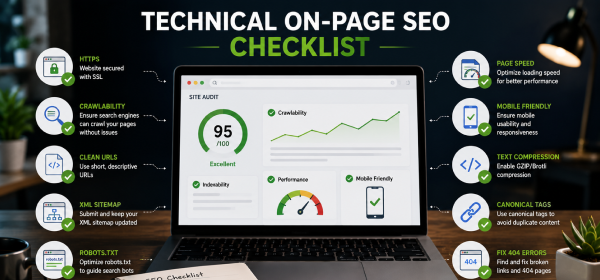
Technical improvements support better crawling and indexing.
| Task | Status |
|---|---|
| HTTPS | ✅ |
| XML Sitemap | ✅ |
| Canonical URL | ✅ |
| Structured Data | ✅ |
| Core Web Vitals | ✅ |
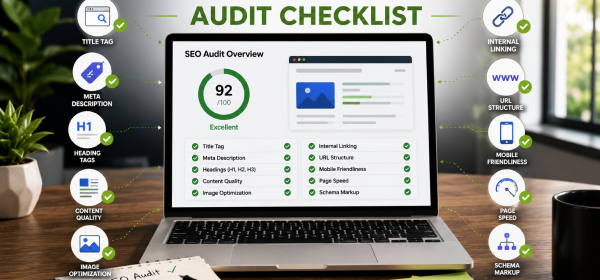
| Checklist | Complete |
|---|---|
| Keyword Research | ✅ |
| Search Intent | ✅ |
| SEO Title | ✅ |
| Meta Description | ✅ |
| H1 Heading | ✅ |
| H2 Structure | ✅ |
| Helpful Content | ✅ |
| Internal Links | ✅ |
| External Links | ✅ |
| Optimized Images | ✅ |
| Mobile Friendly | ✅ |
| Fast Page Speed | ✅ |
| HTTPS | ✅ |
| Schema Markup | ✅ |
| Core Web Vitals | ✅ |
Many pages target keywords but fail to answer what users actually want. Always analyze the search results before creating content.
Repeating the same keyword excessively makes content difficult to read and may reduce its effectiveness. Use natural language and related terms instead.
Using multiple H1 tags or skipping heading levels can confuse both users and search engines. Keep your heading hierarchy logical and consistent.
Internal links help search engines discover related content and encourage users to explore more pages on your website.
Large images, unnecessary scripts, and poor hosting can reduce page speed and negatively impact both rankings and user experience.
An On-Page SEO Checklist is a list of optimization tasks that help improve a webpage's rankings, usability, and search engine visibility before it is published.
Use the checklist every time you publish a new page or update an existing one. Regular audits help maintain SEO performance as search engine guidelines evolve.
High-quality content that satisfies user intent is the most important factor. Technical optimization and keyword placement support content but cannot replace it.
Yes. Proper optimization helps search engines understand your content better, improves user experience, and increases your chances of ranking for relevant keywords.
On-Page SEO builds a strong foundation, but competitive keywords often require Off-Page SEO, backlinks, and technical optimization as well.
A well-structured On-Page SEO Checklist helps ensure that every page on your website meets modern SEO standards before publication. From keyword optimization and content quality to page speed, internal linking, and mobile usability, each element contributes to better search visibility and a stronger user experience.
Rather than treating SEO as a one-time task, use this checklist as a repeatable workflow for every new page and content update. Consistently applying these best practices will improve your chances of ranking higher, attracting qualified organic traffic, and building long-term authority in your niche.